Why print orders need a different courier setup
Printing is not like packing a T-shirt in a satchel bag. You may be sending posters in tubes, foam board signage, folded brochures, books, catalogues or mounted work that can mark easily if it is handled badly. For an online print shop, the courier choice affects how many complaints you get, how often parcels come back damaged and whether repeat customers trust you enough to order again.
CourierThis suits print sellers that process a mix of small and larger orders from Johannesburg, Pretoria, Cape Town, Durban and Gqeberha. It is useful when you need to compare collection options for same day handovers, next day deliveries or lower-cost shipping for bulk jobs that are not urgent. It also helps when the order size changes from one week to the next, because print work is often seasonal and a busy month can push your collection schedule out quickly.
- Flat packs such as flyers, booklets and letterheads
- Rolled items like posters, plans and art prints
- Repeat orders for schools, offices and events
- Short-notice jobs that must leave before month end
The typical equipment set in a small print shop
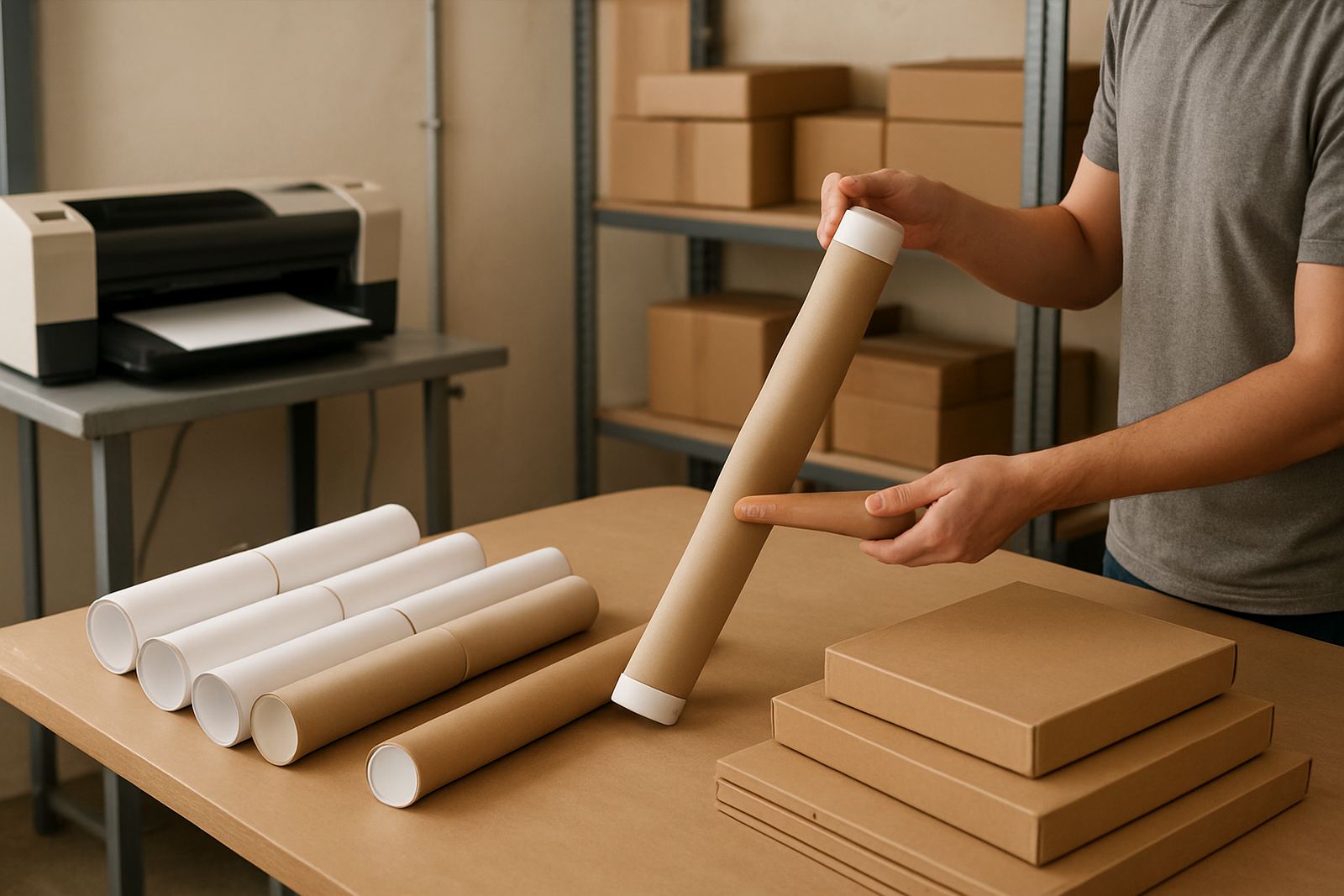
A print seller does not need a huge warehouse to move orders properly, but the packing area must be organised. Most small shops work with a guillotine, cutter, shrink wrap or parcel wrap, tape guns, stacking shelves, a label printer and a scale for accurate weight checks. If you send rolled work, you will also need tubes, end caps and enough counter space to keep the rolls straight before collection.
For mounted or laminated items, corner protection matters more than many owners realise. If the parcel shifts inside the box, the corners take the hit. On humid days in coastal areas, cardboard can soften too, so stronger cartons or tighter wrapping are worth the extra Rand. In Gauteng, load-shedding can delay packing, so it helps to keep labels ready and parcels staged in order before power goes off.
- Parcel scales for checking mass before booking
- Roll tubes for posters, plans and fine art prints
- Flat cartons and backing board for sheeted work
- Stretch wrap, tape and corner protectors
- Printed labels and a clear handover area for collections
How to plan your layout for quicker collections
If collections are slow, staff end up hunting for parcels while the driver is waiting at the gate. A better layout saves time and cuts mistakes. Keep finished work in one section, jobs awaiting payment in another, and urgent parcels near the exit or loading point. If your shop runs from Woodmead or Midrand, where traffic can build up fast, it is useful to have a clean handover zone near the front so drivers are not moving through customer areas.
For shops serving multiple suburbs, the layout should make it easy to separate local deliveries from national shipments. That makes it simpler to book the right service and avoid paying express rates on orders that could travel economy. The best layout is the one your staff can follow at 4 pm on a Friday when the phone is busy and three orders still need to go out.
- Keep a fixed shelf for same day collections
- Use colour coded bins for paid, packed and pending jobs
- Mark oversized parcels clearly so they are not stacked on top
- Place tubes and cartons in sizes that match your usual order mix
Booking the right delivery type for each print order
Not every customer wants the same speed. A design agency in Sandton might want posters delivered urgently, while a small business in Pretoria may be happy with a cheaper service for brochures that are needed next week. CourierThis lets you compare delivery options so you can choose what fits the job instead of guessing. That matters when your margin is tight and a bad shipping choice eats into the sale.
For print shops, the main question is usually whether the order is urgent, fragile or bulky. Express shipping can work for proof packs and client sign offs, while economy shipping is often better for bulk brochures, catalogues and marketing material. Returns collections are also important when a customer receives the wrong artwork version or asks for a reprint after approval changes. Clear tracking helps too, because many print buyers want to know exactly when the parcel will land.
- Express for urgent client presentations and time sensitive events
- Economy for bulk print runs and repeat monthly orders
- Local delivery for nearby customers who need same area drop off
- National delivery for school orders, franchise packs and mailouts
- Tracking support for customers who keep asking where the parcel is
Common mistakes print sellers make with courier bookings
One common mistake is underestimating the size of rolled or mounted work. A parcel might weigh little, but still need special handling because of its length or surface finish. Another mistake is booking too late in the day, then expecting a driver to collect after the cutoff. If you work across Johannesburg, Cape Town or Durban, collection times can vary and the last pickup may not suit every suburb.
Some shops also forget to separate fragile jobs from general stock. A stack of books can crush a poster tube if everything is packed together loosely. Others miss the admin side: missing unit numbers, wrong suburb names or unclear contact details can delay a collection. A simple checklist before booking saves time and reduces failed pickups. It is a small thing, but it saves money.
- Booking the cheapest option for fragile prints
- Using boxes that are too wide for rolled items
- Leaving labels until after packing rush hour
- Not checking suburbs, unit numbers and access instructions
- Mixing urgent orders with standard jobs in one pile
Budget ranges that make sense for small print shops
Most small print businesses want to know what shipping will cost before they quote the client. Budgeting matters because a few bad collection decisions each month can change your profit. As a rough guide, a small local print parcel may fall in the lower Rand range, while larger or faster deliveries will move up depending on distance, weight and handling needs. Rolled items and oversized flat packs can cost more than a standard box, especially when they need careful handling across town or to another province.
For equipment and packing, many small shops can get started without spending a fortune. A basic label printer, scale, tape tools and shelving can be set up for a few thousand Rand. Stronger tubes, cartons and protective materials are ongoing costs and should be added to each job. If you ship regularly to Pretoria, Gqeberha or Durban, it is worth setting a monthly courier budget instead of treating each booking as a one off. That gives you more control when orders jump after a promotion or holiday rush.
- Basic packing tools and shelves: about R2 000 to R8 000
- Label printer and scales: about R1 500 to R6 000
- Ongoing cartons, tubes and wrap: budget per order
- Courier costs: set a weekly or monthly shipping allowance
What a cleaner print operation looks like
A well run print shop knows which orders move by handover and which ones need protection, speed or a return path. That means less scrambling, fewer damaged parcels and better repeat business. When your team can compare courier options quickly, you spend less time phoning around and more time finishing the work that pays. It also helps to offer customers clear delivery choices at checkout, especially if they are buying gifts, event material or business stationery.
CourierThis is a practical fit for print sellers that want reliable pickup booking and delivery support without adding extra admin to the day. Whether you are sending one poster tube or fifty brochure packs, the same rule applies: pack it properly, book the right service and keep the customer informed.